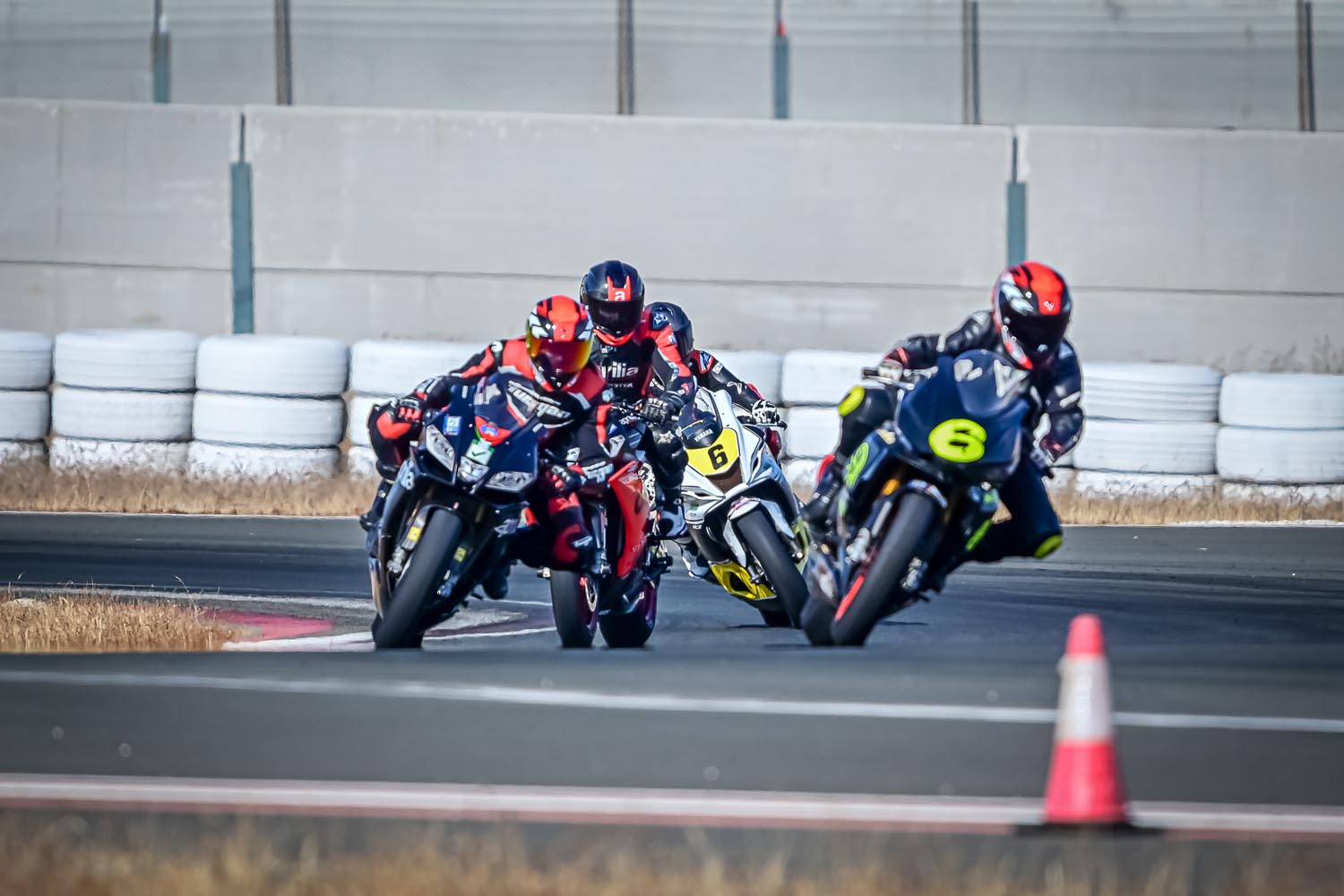

The pressure of motorcycle tires on the circuit is a very important issue, which depending on the level of riding you have and the number of times you ride a year, becomes one of the most important actions to take into account if you are going to ride on a circuit
Tire pressures should be set carefully, especially when driving on the track, always referring to the tire manufacturer's recommendations.
Tires designed for track use have temperatures and pressures at which they work best, which vary according to circumstances. In a certain way it depends on the tire manufacturer, the motorcycle and the external conditions (asphalt temperature, asphalt condition, weather conditions, motorcycle set-up, riding style, etc).
Each time you go to the circuit, adjustments must be made to the front and/or rear pressures based on the following:
- Bike type and configuration
- Track conditions, including surface condition and ambient temperature
- Brand, model and type of tire
- piloting experience
To keep in mind, drive more carefully until the tires reach their ideal operating temperature. Tire pressure dictates the temperature it will reach and its behavior on the track.
Tires intended for ordinary street/highway use do not function the same as circuit tires (slicks) and have different operating temperatures.
Factors Affecting Tire Pressure
We believe there are three important factors that affect tire pressures and you should take them all into account.
Room temperature
This refers to air temperature, but also to track temperature. If it's cold outside and you set your tire pressures when they're cold, by the time the tire warms up to a certain temperature, the pressures in your tires will be higher than if you had set the cold pressures on a warm day. In other words, if the volume of air in the tire remains constant, then the pressure is directly proportional to the temperature. The lower the temperature, the lower the pressure inside the tire, so you'll need more air on a cold day, and that air, when it warms up, will inflate the tire further.
Secondly, on a cold day the track surface will be cold and will not offer the same amount of grip as a hot surface and therefore the tires will not generate as much heat themselves as they would on a hot day. . It is an image similar to when it is raining; the tire will generate heat, but the water will take that heat away, which means it's hard to keep the tires in the correct temperature range.
Total weight
The tires are pushed towards the track by the weight of the motorcycle and rider. Engine torque generates friction between the tire and the track, and it is this friction that creates grip—and heat! The heavier the load, the more friction is generated, and the more heat is produced in the tire. There are other factors as well, but this is how a motorcycle works hard on the tire (different engine designs and power outputs also have some effect), but a more influential factor is how the rider works with the tire. Some riders are smooth, and others are less so, and this affects how hard the tire works and the amount of heat it generates.
Tire construction
This is also known as the optimal operating temperature range of a tire. Road tires are typically designed to perform in less-than-optimal conditions; they have a wide operating range. They are also often developed with compounds that perform better in very cold conditions but not as well in very hot weather.
That's why on those sunny days when the rider and the bike are working together as one, you can feel the tires being "slippery" and that's because you're starting to work the tire out of its operating range. optimum temperature. If you ride road tires on the track, you will experience it in just a few laps.
Track specific tires use different compounds than a road tire and are designed for optimal grip and lap times, but ONLY if you are running them at the manufacturer's recommended tire pressures. Not only do they use different compounds, but they also use different constructions than road tires, often firmer and with a different profile. All of them are designed to be used in optimal conditions.
RECOMMENDATION: Always check the tire pressure when driving at high speeds. Failure to do this could cause you to lose control of the motorcycle and result in serious injury. If possible, look at it again during the following batches of the day in case there is excessive loss.
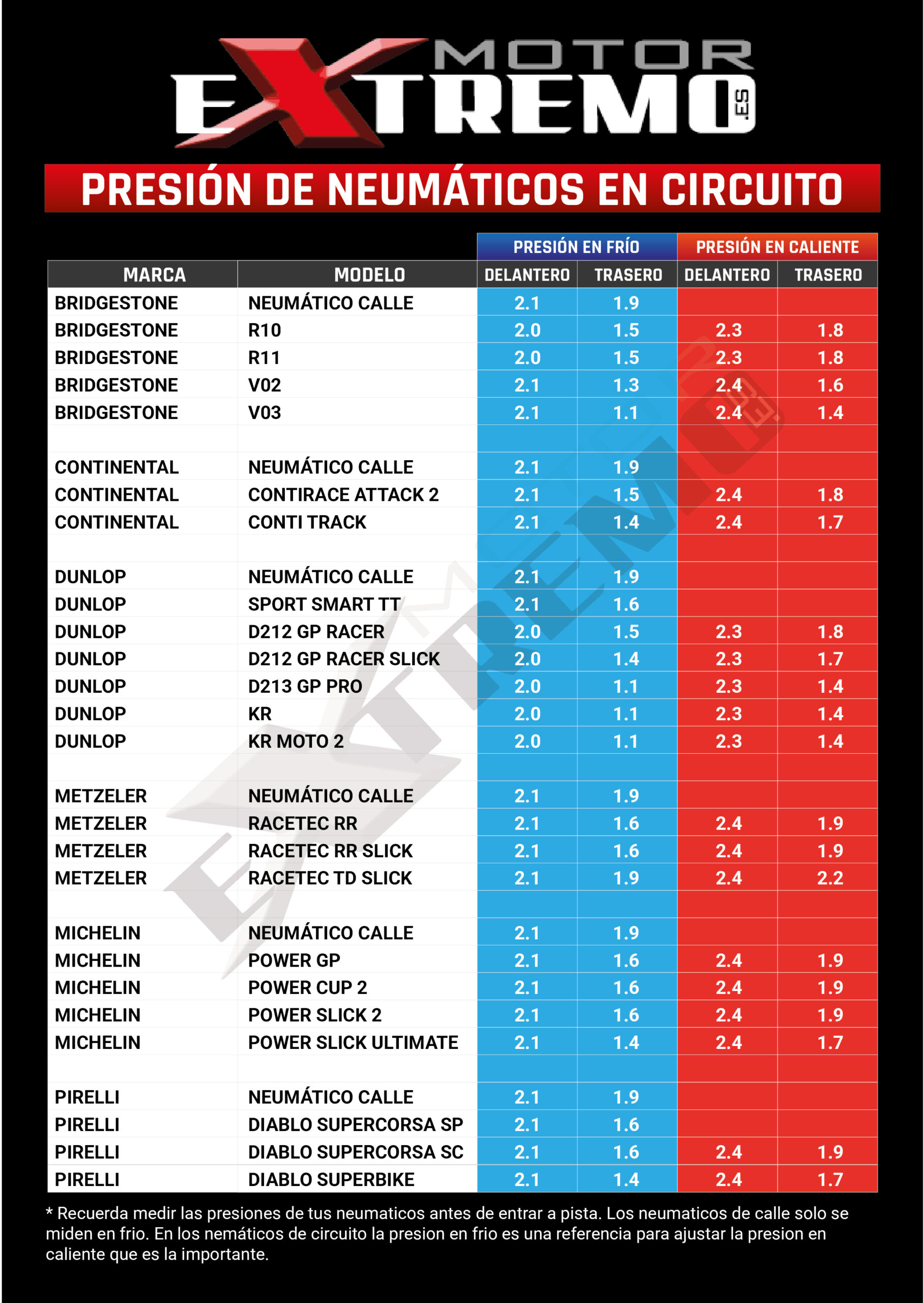
The ideal tire pressure will depend on multiple variables, as we have commented, so this table represents a middle ground for all those who want to roll in circuit.
Tire pressure table for motorcycles on circuit
We leave you a table of tire pressures for circuit, which we have made together with tire distributors, manufacturers, drivers and competition teams, exclusively for.
The usual pressures for street tires that we can use on the circuit are: Front 2.1. Rear: 1.9. Remember to measure the pressures of your tires before entering the track. Street tires are only measured cold. In circuit tires, the cold pressure is a reference to adjust the hot pressure, which is the important one.
In case of any doubt in the circuit, our tire service and our mechanics will be able to advise you to have the right pressures in your tires.
Keep in mind!
The use of tires on the track and on the road is completely different. On the circuit, the entire tread band is used, a higher temperature rise is obtained and the riding is much more racing, so it is necessary for the carcass to flex together with the suspension. On the road, such high working temperatures are not reached and the demands of the tire are not taken to extremes. An example: some riders who use street circuit tires, such as the Dunlop D212 or the Bridgestone R11, do not put the pressure recommended by the motorcycle manufacturer, but 2.3 in front and 2.5 in the rear to avoid overpressure in the tire. Keep this in mind when using your tires, whether on the track or on the road.
* Update: March 2026 – Bridgestone Pressures.